


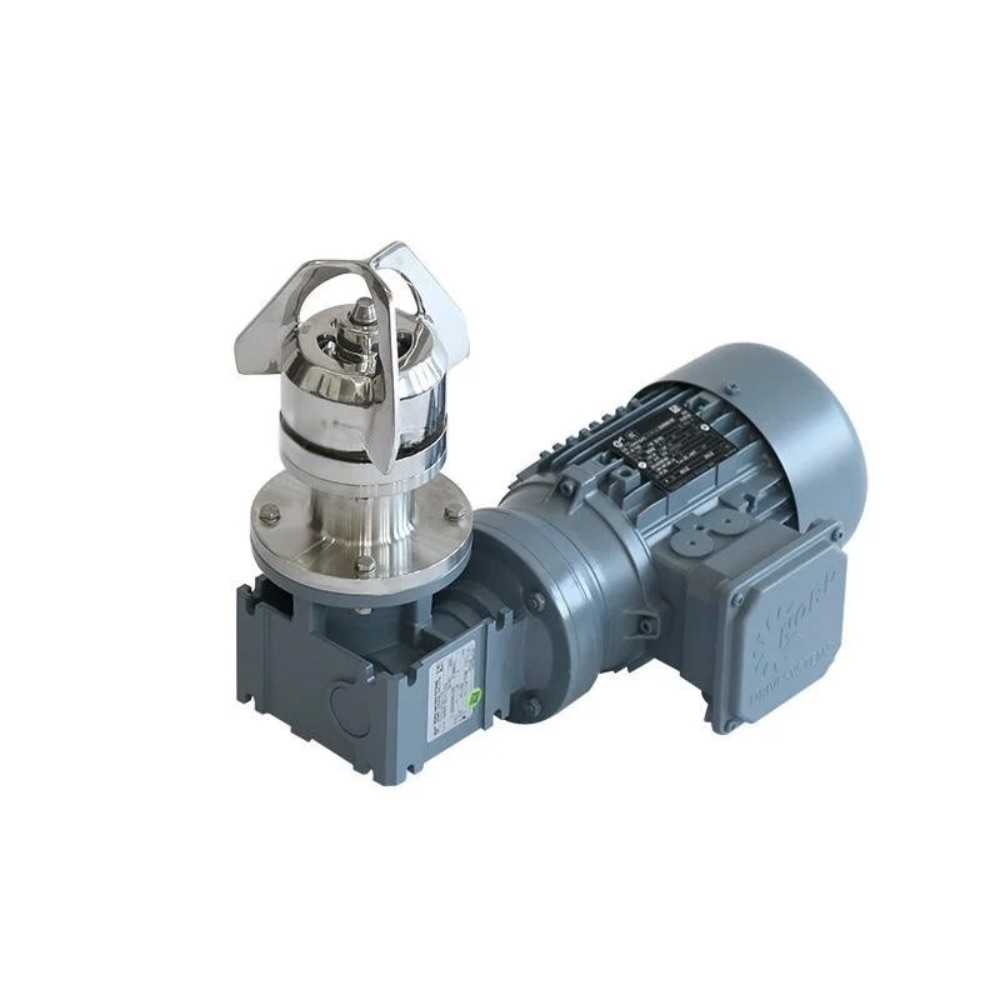
Seal-Less Magnetic Mixer Systems for Industrial Reactors Manufactured in India
Featured Snippet Summary
A magnetic mixer is a seal-less agitation system that uses magnetic coupling to transmit torque to an internal impeller inside a sealed vessel. As a trusted Magnetic Mixer Manufacturer in India, Fluid Mixing Technologies designs magnetic agitators for chemical reactors, hazardous fluid handling, and contamination-free industrial mixing systems.
As an experienced Magnetic Mixer Manufacturer in Pune, we manufacture advanced magnetic agitation systems used in chemical processing, specialty materials production, and high-integrity manufacturing environments where process leakage, contamination, and maintenance downtime must be eliminated.
Our systems are designed to operate reliably in reactors handling volatile chemicals, high-viscosity materials, and sensitive formulations requiring controlled mixing conditions.
What Is a Magnetic Mixer and Why Is It Used in Industrial Reactors?
A magnetic mixer is an agitation system that uses magnetic coupling instead of a mechanical shaft seal to transmit torque from the motor to an internal impeller located inside a sealed vessel.
Unlike conventional agitators that rely on rotating shafts passing through mechanical seals, magnetic mixers maintain complete separation between the drive system and process fluid.
This seal-less design prevents leakage, reduces maintenance requirements, and improves operational safety.
Industrial facilities prefer magnetic mixers because they provide reliable agitation in processes where chemical containment, equipment longevity, and consistent mixing performance are essential.
- Eliminates mechanical seals that commonly fail in industrial reactors :- Mechanical seals are exposed to friction, pressure variations, and chemical attack. Magnetic coupling removes this vulnerable component, significantly improving system reliability.
- Ensures complete containment of hazardous or volatile fluids :- Since the drive system remains outside the process vessel, there is no direct shaft penetration. This prevents leaks and protects operators from chemical exposure.
- Provides stable mixing performance in pressurized environments :- Magnetic mixers operate effectively in sealed reactors where pressure, temperature, and chemical compatibility must be carefully controlled.
Typical Technical Specifications of Industrial Magnetic Mixers
Magnetic mixers are designed to operate across a wide range of industrial reactor sizes and processing conditions.
These specifications allow industrial magnetic mixers to be used in both pilot-scale systems and large industrial reactors, making Fluid Mixing Technologies a reliable Magnetic Mixer Manufacturer in India serving multiple process industries.
| Parameter | Typical Range |
|---|---|
| Power | 0.25 kW – 15 kW |
| Torque Transmission | 5 Nm – 500 Nm |
| Mixing Speed | 50 – 1500 RPM |
| Vessel Capacity | 20 L – 10,000 L |
| Operating Pressure | Up to 20 bar |
| Operating Temperature | Up to 250°C |
| Material of Construction | SS304 / SS316 / Hastelloy |
| Magnet Type | Rare-earth Neodymium |
| Sealing System | Hermetically sealed (no shaft seal) |
How Magnetic Coupling Works in Industrial Mixing Systems
Magnetic mixers use a non-contact torque transmission system that allows the impeller inside the vessel to rotate without a shaft penetrating the reactor wall.
This eliminates leakage risks and ensures complete process isolation.
An external motor rotates a magnetic drive assembly placed outside the vessel. The rotating magnetic field passes through a sealed containment shell and transfers torque to an internal magnetic rotor connected to the impeller inside the reactor.
As the internal rotor turns, the impeller mixes the process fluid efficiently while the drive system remains completely separated from the product.
Key components of the system include:
External magnetic drive assembly
The motor and gearbox rotate the outer magnet carrier, creating the magnetic field required for torque transmission.
Containment shell (sealed barrier)
This shell separates the process fluid from the drive system while still allowing magnetic energy to pass through.
Internal magnetic rotor with impeller
The rotor receives torque from the external magnets and rotates the impeller, enabling controlled and contamination-free mixing.
Explain what the Core Components of a magnetic mixer system are?
Industrial magnetic mixers are composed of several precisely engineered components designed to operate reliably under demanding process conditions.
1. Drive motor and gearbox
The motor provides the rotational energy required for mixing. Gearboxes are selected based on torque requirements, fluid viscosity, and reactor geometry.
2. Magnetic coupling assembly
High-strength rare-earth magnets transmit torque across the containment shell. Proper design ensures stable operation even under fluctuating process loads.
3. Containment shell (isolation barrier)
Manufactured from non-magnetic alloys such as SS316 or Hastelloy, the containment shell prevents leakage while maintaining efficient magnetic transmission.
4. Internal impeller assembly
The impeller generates the flow pattern inside the vessel. Its design determines mixing efficiency, circulation patterns, and reaction consistency.
What Containment Shell Materials Are Used in Magnetic Mixers?
The containment shell must simultaneously maintain structural strength, corrosion resistance, and magnetic efficiency.
Different materials are selected depending on the process environment and chemical compatibility requirements.
Stainless steel containment shells
SS316 and SS316L are commonly used in general industrial applications due to their excellent corrosion resistance and mechanical strength.
Hastelloy containment shells
For highly corrosive chemical environments, Hastelloy provides superior resistance to aggressive media such as acids and chlorinated compounds.
Non-magnetic alloy construction
Containment shells must be made from materials that do not interfere with the magnetic field, ensuring efficient torque transfer between external and internal magnets.
Bearing Systems Used in Magnetic Agitators
Bearings inside magnetic agitators must operate reliably within sealed environments while resisting chemical exposure and thermal stress.
Ceramic bearings for corrosive environments
Ceramic materials provide excellent chemical resistance and dimensional stability, making them suitable for aggressive chemical processes.
Carbon bearings for high-temperature systems
Carbon bearings withstand high operating temperatures and maintain performance under thermal stress conditions.
PTFE or composite bushings for specialized applications
These materials offer low friction and strong chemical resistance, improving system durability in specific processing environments.
Magnetic Mixer Configurations Used in Industrial Systems
Magnetic mixers can be installed in different configurations depending on reactor design, mixing requirements, and process flow characteristics.
Top-entry magnetic mixer
Mounted on the top nozzle of a reactor, this configuration is commonly used in batch processing systems where mixing occurs vertically within the vessel.
Bottom-entry magnetic mixer
Installed at the base of the reactor, this design allows complete vessel drainage and is often used in sterile or hygienic applications.
Reactor magnetic agitator systems
These systems are specifically engineered for sealed reactors handling pressurized or hazardous fluids requiring leak-proof operation.
Inline magnetic mixers
Inline configurations are integrated directly into pipelines, enabling continuous mixing processes within flow-based systems.
Impeller Designs Used in Industrial Magnetic Mixers
Impeller selection directly influences mixing efficiency, flow patterns, and reaction consistency within industrial reactors.
Marine impeller
Designed for axial-flow mixing, marine impellers are effective for low- to medium-viscosity fluids requiring bulk circulation.
Rushton turbine
This radial flow impeller is commonly used for gas-liquid dispersion and for chemical reactions that require strong turbulence.
Anchor impeller for high-viscosity fluids
Anchor impellers are used for thick materials such as adhesives and sealants, where uniform mixing of viscous fluids is required.
Pitched blade turbine
This design combines axial and radial flow characteristics, making it suitable for a wide range of industrial mixing processes.
Magnetic Mixer vs Conventional Mechanical Agitator
| Parameter | Magnetic Mixer | Conventional Agitator |
|---|---|---|
| Sealing System | No seal (hermetic) | Mechanical seal |
| Leakage Risk | None | High over time |
| Maintenance | Low | High |
| Process Contamination | Eliminated | Possible |
| Pressure Handling | Excellent | Limited |
| Lifecycle Cost | Lower | Higher |
This comparison highlights why many industries are shifting toward Industrial Magnetic Mixer Manufacturer in India solutions for critical mixing processes.
Industrial Applications of Magnetic Mixer Systems
Magnetic mixers are widely used in industries where reliable mixing and containment of process fluids are essential.
Fertilisers and Agrochemicals
Nutrient suspension reactors
Magnetic mixers ensure even distribution of nutrients and active ingredients, helping produce stable fertilizer formulations.
Pesticide formulation vessels
Seal-less mixing systems prevent leakage of hazardous agrochemicals while maintaining consistent mixing performance.
Oil and Gas
Chemical injection blending systems
Magnetic mixers enable safe mixing of volatile additives used in drilling fluids and refining processes.
Refinery additive preparation tanks
Reliable agitation ensures proper blending of additives that influence fuel properties and product quality.
Water and Wastewater Treatment
Chemical dosing reactors
Magnetic mixers ensure safe and consistent preparation of treatment chemicals used in purification processes.
Flocculant preparation tanks
Uniform mixing improves floc formation, which enhances sedimentation and filtration efficiency.
Plastics and Polymers
Polymer additive reactors
Magnetic mixers provide uniform dispersion of stabilizers and additives during polymer processing.
Resin modification systems
Consistent mixing improves polymer performance characteristics and product quality.
Paint and Coatings
Pigment dispersion reactors
Magnetic mixers ensure even pigment distribution, improving color consistency and coating quality.
High-solid coating preparation
Efficient mixing maintains uniform viscosity and prevents sedimentation during paint formulation.
Adhesives and Sealants
High-viscosity adhesive mixing systems
Magnetic agitators maintain uniform composition in adhesive formulations with high viscosity.
Resin blending reactors
Reliable mixing improves bonding performance and product stability.
Electric Vehicles (EVs) and Batteries
Battery slurry preparation systems
Magnetic mixers ensure homogeneous dispersion of electrode materials used in lithium-ion battery manufacturing.
Electrolyte preparation vessels
Seal-less mixing prevents contamination that could impact battery performance and lifecycle.
How to Select the Right Magnetic Mixer for Your Process
Selecting the correct magnetic mixer requires careful evaluation of several process parameters.
Fluid viscosity and density
Highly viscous materials require higher torque capacity and specialized impeller designs.
Reactor size and geometry
Vessel dimensions influence impeller size, positioning, and mixing efficiency.
Operating pressure and temperature
Mixers must be designed to withstand process conditions without affecting magnetic coupling efficiency.
Desired mixing regime
Axial or radial flow patterns must be selected depending on the mixing objective and process characteristics.
Why Choose Fluid Mixing Technologies?
Fluid Mixing Technologies designs and manufactures advanced mixing systems tailored to complex industrial processes.
Engineering-driven mixer design
Each system is designed based on process parameters rather than generic configurations, ensuring optimal performance.
Manufacturing expertise in Pune
Our facility enables precision fabrication and reliable delivery for customers across India and international markets.
Industry-specific application knowledge
We support clients across chemicals, energy, materials, and advanced manufacturing industries.
As a reliable Magnetic Agitator Manufacturer in India and Magnetic Mixer Manufacturer in Pune, Fluid Mixing Technologies provides dependable mixing solutions designed for long-term operational efficiency.
Talk to Our Engineering Team
If your plant is experiencing seal failures, leakage risks, or inconsistent mixing performance, magnetic mixer systems can significantly improve process reliability.
Our engineering team will help you evaluate torque requirements, reactor compatibility, and impeller selection to identify the right mixing solution.