
What to send us
You do not need the original drawings. These photos and figures let our engineers identify the agitator and design a part or a replacement that fits:
- The motor and gearbox nameplates: power, speed, frame size and the gearbox ratio
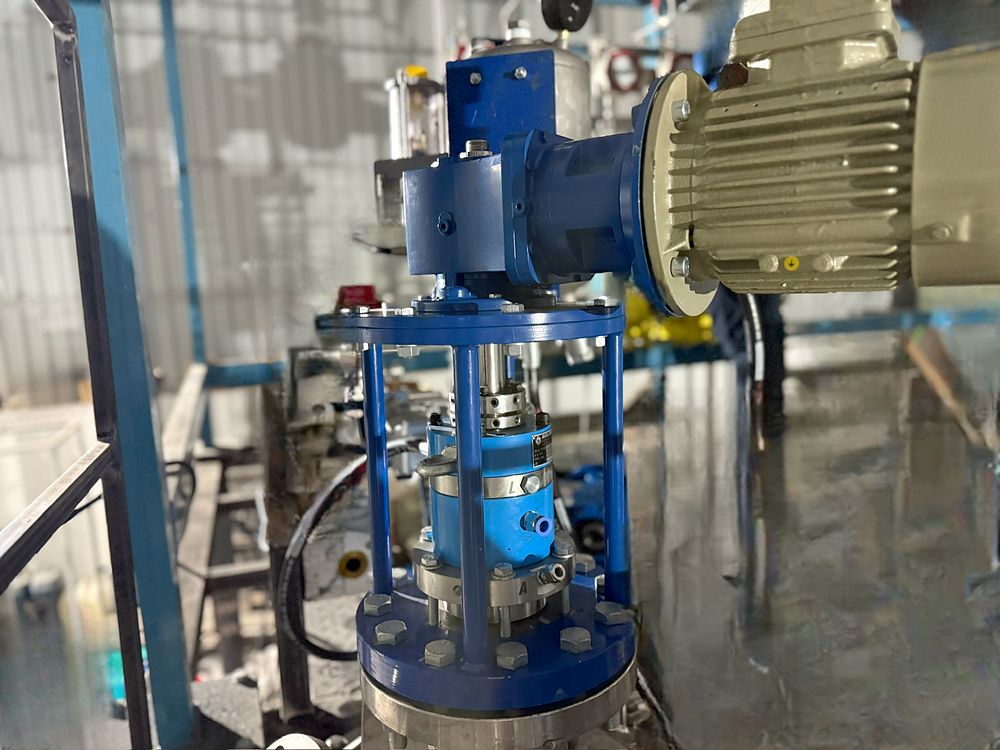
- The drive, the mounting flange or bridge and the shaft seal, from two sides
- The tank: diameter, liquid height, bottom shape and the nozzle the agitator sits on
- The impeller, if you can see it: its type, diameter and how far it sits above the bottom
- What the agitator does, and what goes wrong: wear, vibration, a leaking seal, poor mixing
Photos from a phone are fine. Send them through the enquiry form, by email to sales@fluidmixtech.com, or on WhatsApp to +91 73852 62875.
What we supply
| Complete replacement | A new agitator designed for your duty that fits the existing nozzle, flange or bridge, so the tank needs no changes |
|---|---|
| Impellers | Hydrofoils, pitched blade and disc turbines, propellers, anchors and disperser blades, made to your drawing or to the old part |
| Shafts and hubs | Machined in our works; solid or hollow, one piece or coupled, with the keyways and fits of the original |
| Seals | Lip seals, stuffing boxes and single or double mechanical seals, with a seal housing to suit |
| Drives | Geared motors, gearboxes and couplings matched to the speed and torque the impeller needs |
| Mining and minerals | Impellers, shafts, gearboxes and seals for leach, CIL/CIP, flotation conditioner, slurry and precipitation agitators, with wear allowance where the slurry is abrasive |
| Upgrades | A different impeller, speed or drive when the product, batch size or duty has changed |
Why replacements fail, and how we avoid it
A copy of a worn part fixes the symptom. If the old agitator vibrated, wore its seal or overloaded its motor, a copy does the same. Before we make a replacement we check the design against your duty: the impeller power at the thickest point of the batch, the shaft for stress, deflection and critical speed, and the seal for the pressure, temperature and product. Where the old design was the problem, we tell you, and offer the change that solves it.


Common questions
Can you replace an agitator if we have no drawings?
Usually, yes. Photos of the nameplate, the drive, the mounting flange and the tank, with a few measurements, are enough for us to design a replacement that fits. Where it helps, our engineer visits the site to measure.
Do you supply only the impeller or the shaft?
Yes. We make impellers, shafts, hubs and couplings on their own, to your drawing or to measurements of the old part. FMT also supplies mechanical seals and gearboxes as part of a repair.
Our agitator vibrates or the seal keeps failing. Can you help?
Often the cause is in the design: a shaft running too close to its critical speed, an impeller that overloads the drive, or a seal that does not suit the duty. We assess the agitator, find the cause and propose the change that fixes it. See assessment of existing mixers.
Can the process change without buying a new agitator?
Sometimes. A new impeller, a different speed or a larger drive can let an existing agitator handle a higher viscosity, more solids or a new batch size. We check whether the shaft, bearings and seal can carry the new loads before we recommend it.