Before flotation, ground ore slurry is conditioned with collectors, activators, depressants or pH modifiers. The reagents only work if every particle meets them, so a conditioner needs strong top-to-bottom circulation and an even mixing time, while the coarsest particles must not settle.
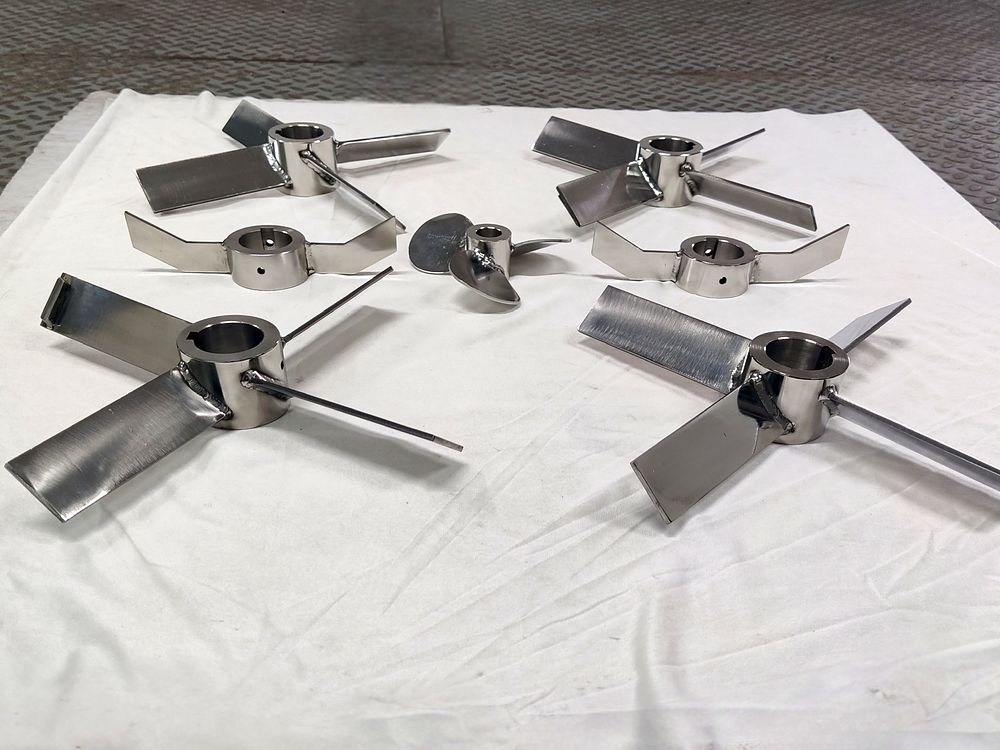
We size the agitator for the tank, the slurry density and the conditioning time your metallurgist sets: high-pumping axial impellers, one or two on the shaft, at a speed that suspends the coarsest particles. Reagent feed points go where the flow carries them straight into the impeller zone. Wetted parts are carbon steel or stainless steel, chosen against the reagents, with a wear allowance on the blades.
The same agitators serve pulp distribution and surge tanks ahead of the flotation cells. For reagent make-up and dosing tanks, see slurry and reagent tank agitators.
Where it is used
- Zinc and lead flotation conditioners
- Copper flotation conditioners
- Phosphate flotation conditioners
- Activator and pH-modifier conditioning tanks
- Pulp distribution and surge tanks ahead of flotation
How FMT builds it
| Impellers | High-pumping axial hydrofoils or pitched blade turbines, one or two on the shaft |
|---|---|
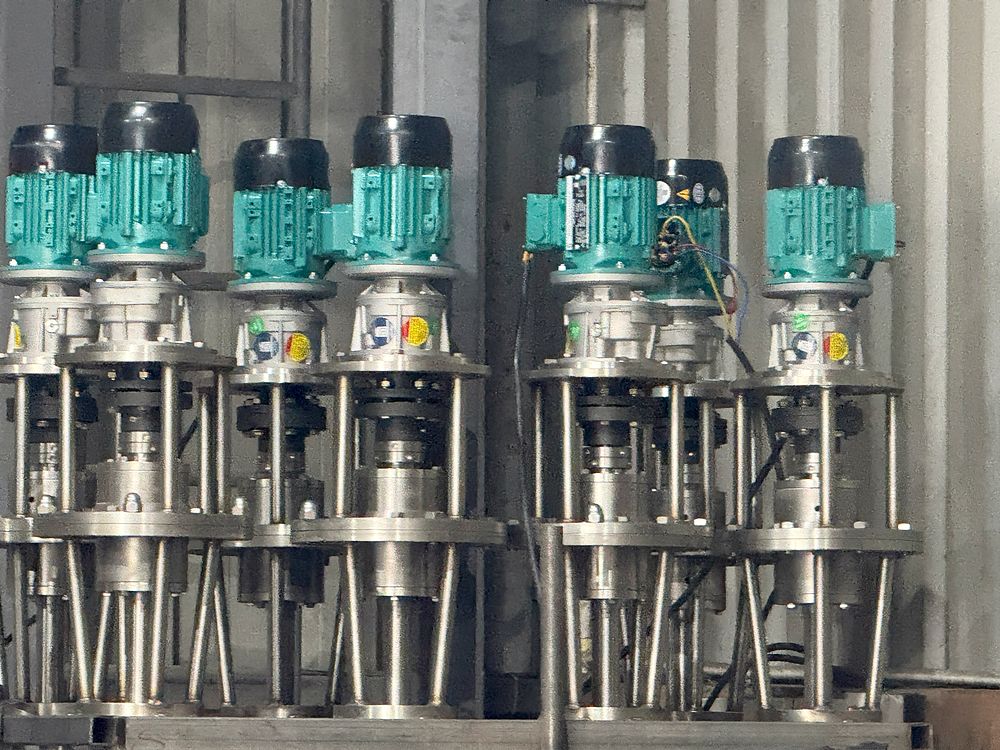
| Drive | Motor with gearbox on a tank-top or beam mounting, for continuous duty |
| Shaft | Solid shaft checked for stress, deflection and critical speed |
| Wear | Wear allowance on the blades; replaceable blades on request |
| Materials | Carbon steel or SS304 / SS316L wetted parts, chosen against the reagents |
| Baffles | Baffle layout advised with the agitator when we do not supply the tank |
The red lines show how the impeller moves the liquid. Every FMT unit is sized for its own vessel, product and duty, so yours is drawn for your tank in the offer.
Send your vessel for a drawingWhat we need to size it
- Tank size and working level
- Slurry flow, density, solids percentage and top particle size
- Conditioning time set by your metallurgist
- Reagents added and where they are fed
- Power supply and the mounting