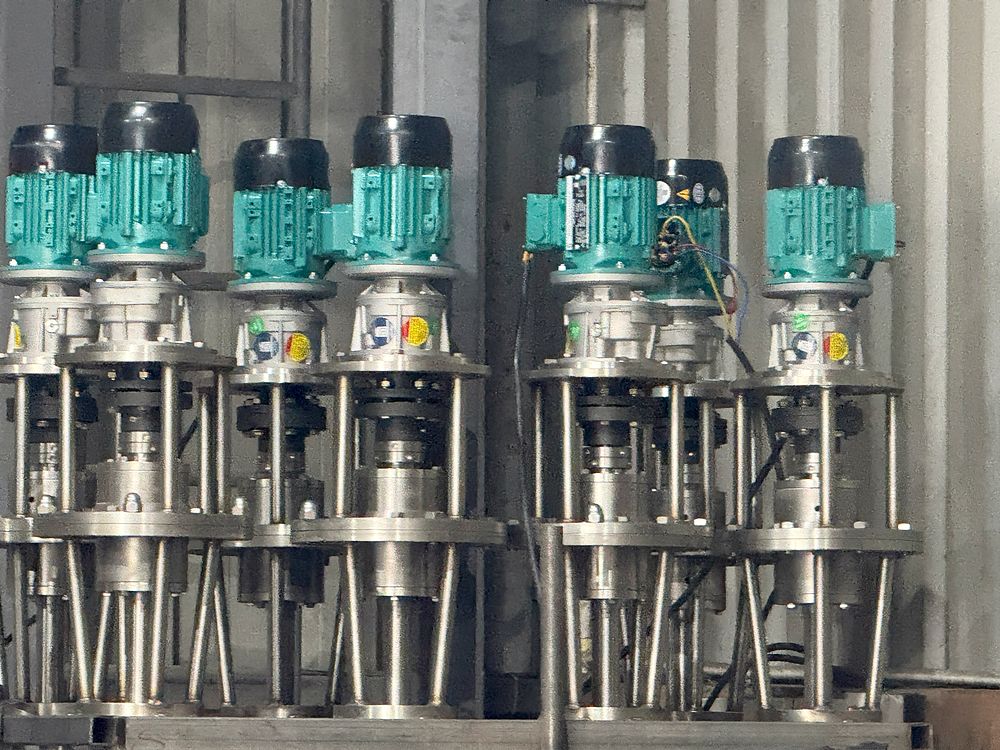
In an aerobic fermentation the organisms grow only as fast as oxygen reaches them, so the agitator's main job is gas dispersion: breaking the air from the sparger into fine bubbles and spreading them through a tall vessel. It also has to blend in nutrients and feed, keep the temperature even and carry the heat of fermentation to the cooling surfaces, all without damaging cells that are sensitive to shear.
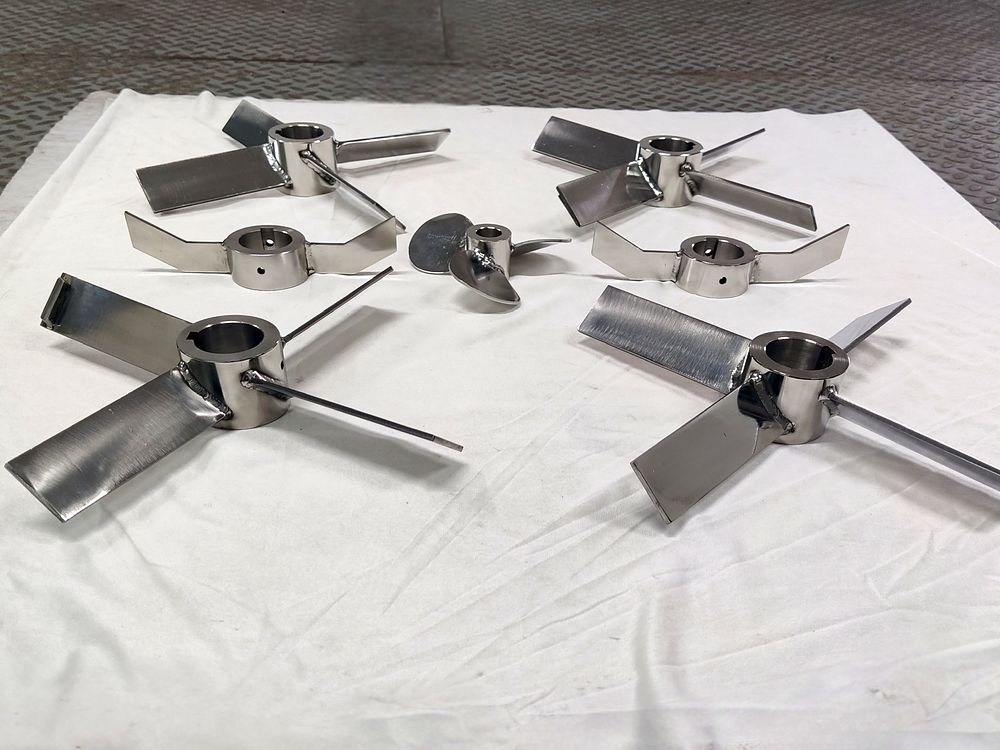
We design fermenter agitators for the vessel volume, the oxygen demand and the shear limits of the culture. A common arrangement is a disc (Rushton) turbine at the bottom to break up the air, with hydrofoils or pitched blades above to circulate the broth; gas-inducing designs are used where they suit. Wetted parts are SS 316 / 316L with a hygienic finish, and the shaft seal and finish are chosen for cleaning and sterilising in place.
Where it is used
- Pharma and biotech fermentation
- Enzyme and vaccine production
- Bio-ethanol fermentation
- Bio-fertiliser production
- Food fermentation
- Batch, fed-batch and continuous processes
How FMT builds it
| Impellers | Rushton (disc) turbine for gas dispersion; hydrofoils or pitched blades for circulation; gas-inducing designs where they suit |
|---|---|
| Aeration | Impeller arrangement matched to the sparger and the air flow |
| Wetted parts | SS 316 / 316L with a hygienic internal finish |
| Shaft seal | Seal suited to cleaning and sterilising in place (CIP / SIP) |
| Drive | Geared drive, variable speed on request; flameproof or air-motor drives where required |
| Support | Bottom steady bearing for tall vessels where needed |
The red lines show how the impeller moves the liquid. Every FMT unit is sized for its own vessel, product and duty, so yours is drawn for your tank in the offer.
Send your vessel for a drawingWhat we need to size it
- Vessel volume, diameter and height
- Organism and process: batch, fed-batch or continuous
- Oxygen demand and air flow
- Shear limits of the culture
- Heat of fermentation and the cooling arrangement
- Cleaning and sterilising requirements