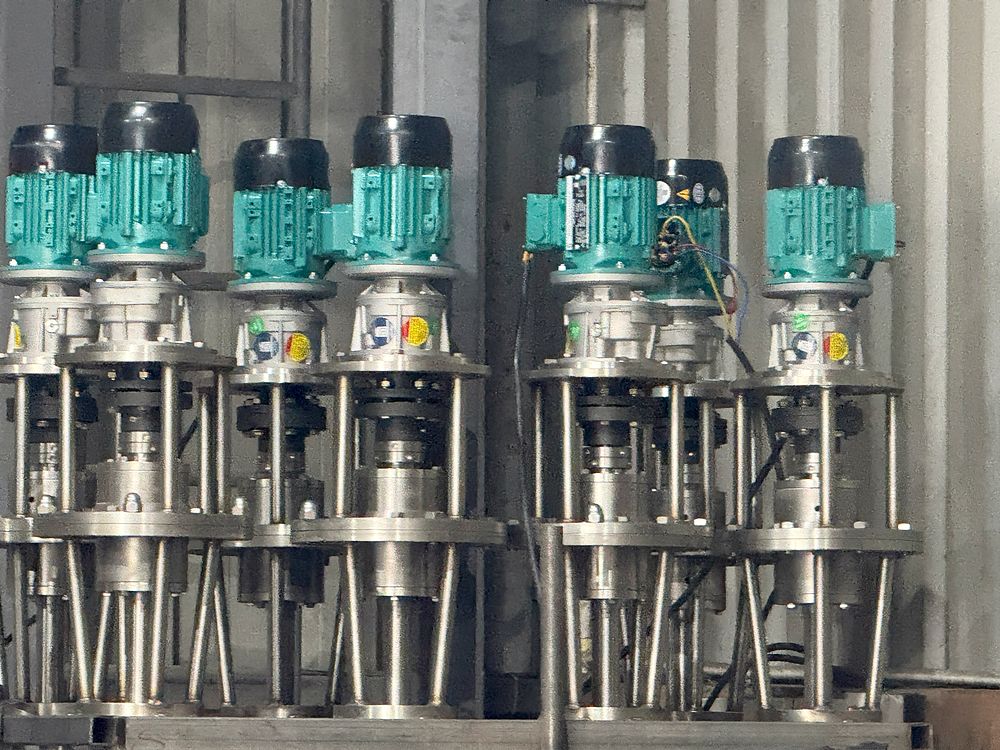

Many plants receive raw materials and ship finished products in 1000-litre IBC totes. Products that settle, separate or thicken in storage need mixing before use, and an IBC mixer does it in the tote itself, with no pumping into a separate tank and no extra cleaning.
The frame rests on the top of the IBC cage and the agitator is clamped in place, so the shaft stays centred while it runs. We size the geared motor, speed and impeller for the thickest product the mixer will see, and choose an impeller that reaches the bottom of the tote, so settled solids are lifted back into suspension.
Where it is used
- Resins, emulsions and additives delivered in IBCs
- Products that settle or separate in storage
- Re-mixing before dosing or filling
- Small batches made directly in the tote
How FMT builds it
| Drive | Geared motor; flameproof motor where the area classification requires it |
|---|---|
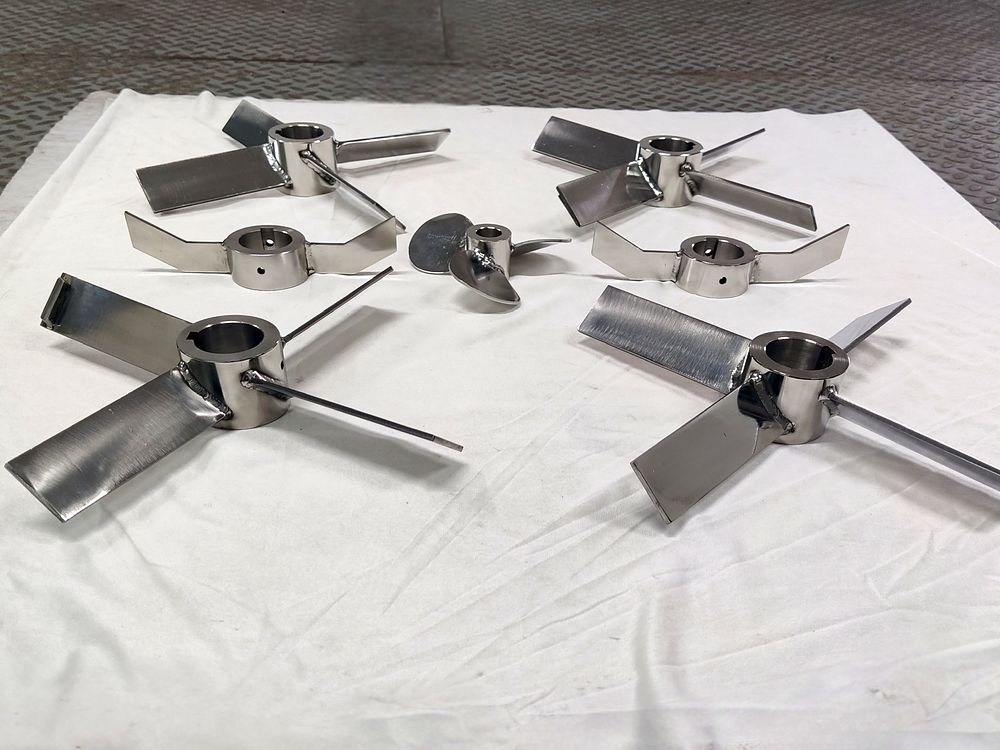
| Impeller | Hydrofoil, pitched blade or folding impeller sized to pass the tote opening |
| Frame | Steel frame that sits across the IBC cage, with a clamp to hold the agitator centred |
| Wetted parts | SS 304 or SS 316 |
The red lines show how the impeller moves the liquid. Every FMT unit is sized for its own vessel, product and duty, so yours is drawn for your tank in the offer.
Send your vessel for a drawing
What we need to size it
- Vessel diameter, straight-side height and bottom shape (dished, conical, flat)
- Working volume and liquid level range, including the lowest level at which mixing must continue
- Product: density, viscosity at operating temperature, solids content and particle size
- What the agitator must do: blend, suspend, disperse, dissolve, heat or cool, react
- Operating and design pressure and temperature, and whether the vessel is open or closed
- Preferred materials, seal type, motor make, power supply and hazardous-area classification