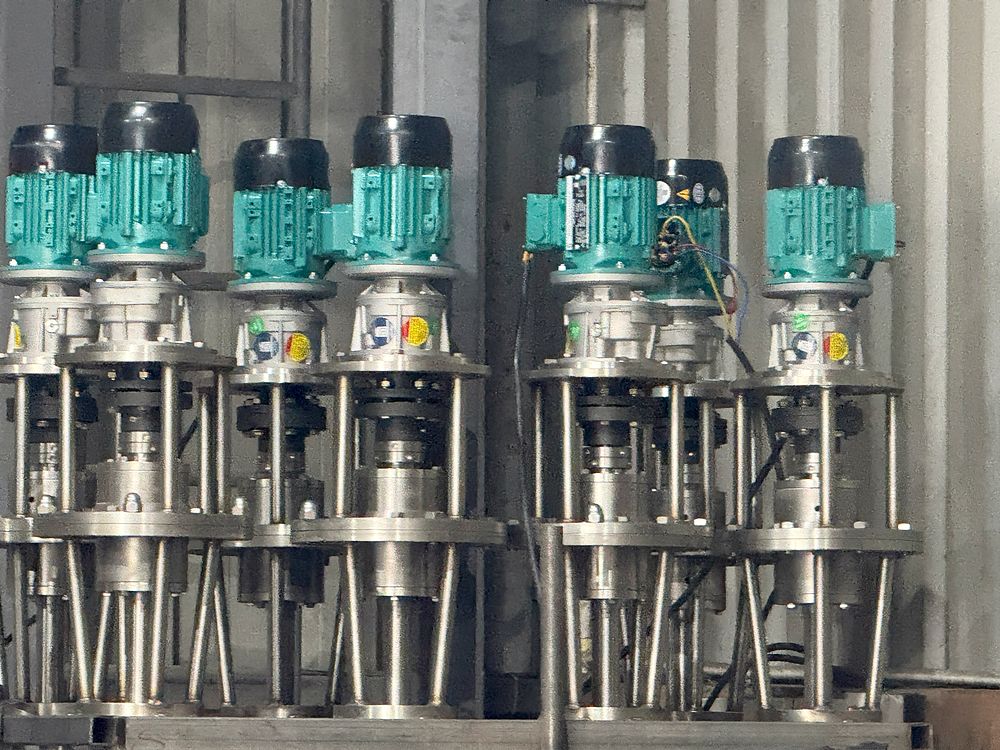
In a crystallizer the agitator walks a narrow line. It has to keep every crystal in suspension and the supersaturation even through the vessel, so that crystals grow instead of new ones forming in hot or cold spots. Too much shear, though, breaks crystals and creates fines, which spoils the size distribution and slows filtration.
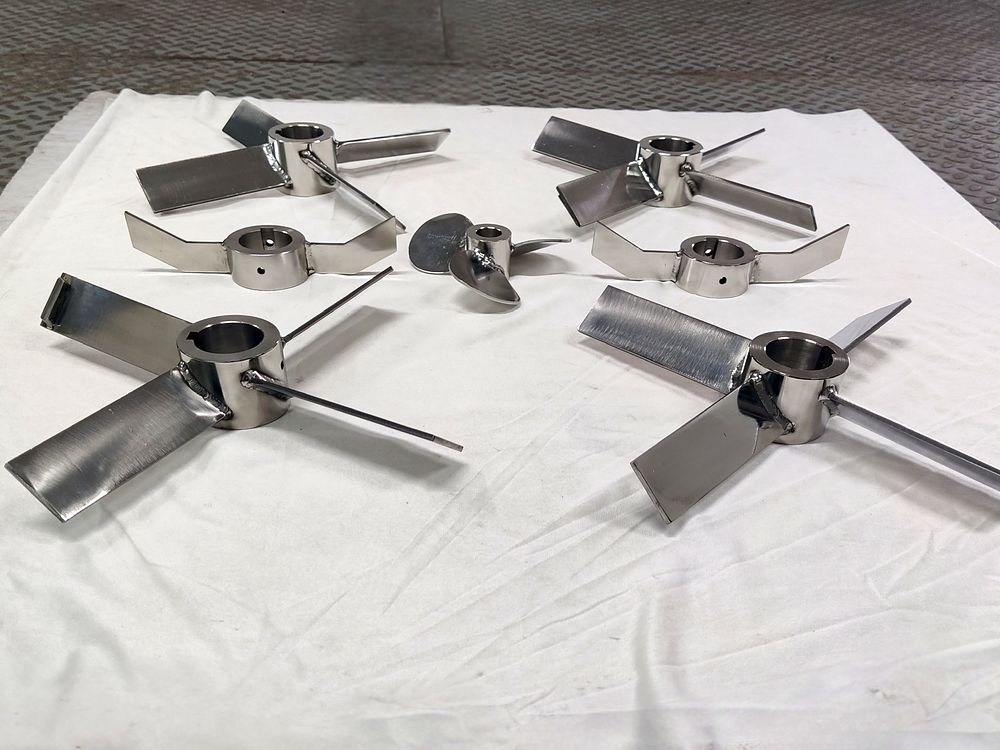
We choose the impeller and speed for that balance: a hydrofoil or pitched blade for gentle, efficient suspension; an anchor or helical ribbon where the slurry is thick or a cooled wall has to be swept; or an impeller inside a draft tube for a strong, controlled circulation. The agitator is designed for the vessel and the cooling or evaporation method, batch or continuous.
Where it is used
- Cooling crystallization of chemicals and fertilisers
- Pharma and fine chemical crystallization
- Food and nutraceutical crystallization
- Precipitation and neutralisation vessels
- Oilfield chemical crystallizers
How FMT builds it
| Impellers | Hydrofoil, pitched blade, anchor, helical ribbon, or an impeller in a draft tube |
|---|---|
| Duty | Sized to just suspend the crystals, limiting shear and breakage |
| Heat transfer | Wall-sweeping anchor where a jacketed wall must be kept clean |
| Drive | High-torque geared drive; flameproof or air-motor drives where required |
| Shaft seal | Mechanical seal suited to the slurry, temperature and pressure |
| Wetted parts | SS 304 or SS 316 / 316L; special alloys on request |
The red lines show how the impeller moves the liquid. Every FMT unit is sized for its own vessel, product and duty, so yours is drawn for your tank in the offer.
Send your vessel for a drawingWhat we need to size it
- Vessel drawing, including any draft tube, coils or baffles
- Batch or continuous operation, and the cooling or evaporation method
- Slurry: solids content, crystal size and density, liquor viscosity
- The crystal size you are aiming for, and any breakage problems today
- Temperature profile and heat transfer duty
- Material, seal and drive requirements