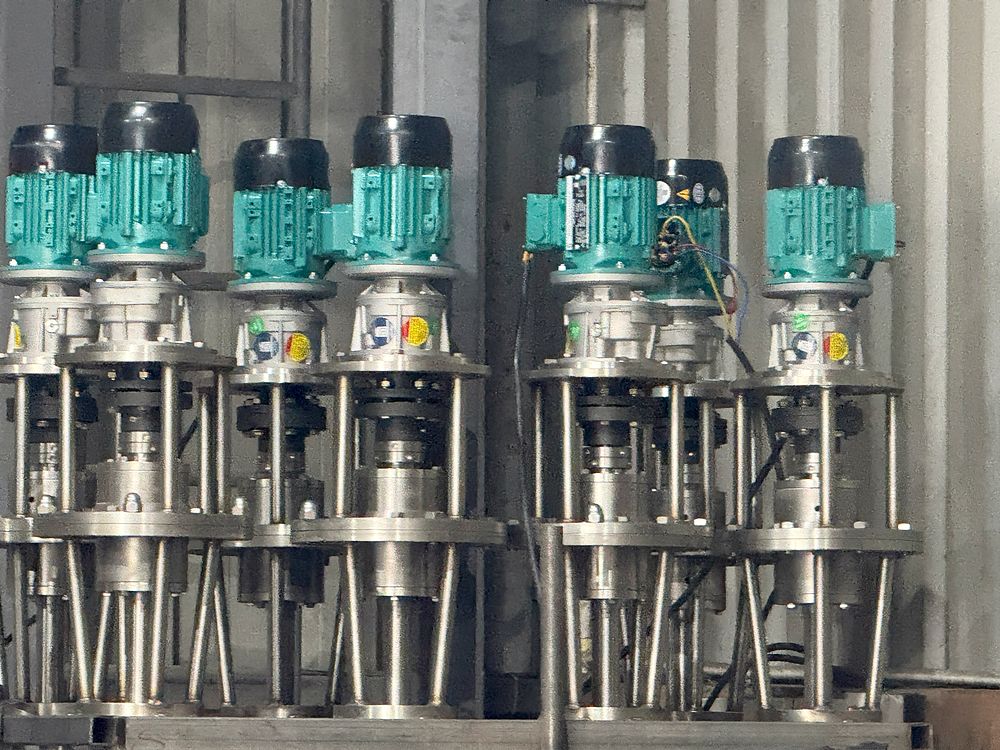

Magnetic mixers are used where a shaft seal is the weak point: sterile and clean processes, toxic or volatile liquids, and vessels where cleaning around a seal is difficult. The vessel stays closed and the only parts inside are the impeller, its bearing and the containment shell.
The torque a magnetic coupling can transmit is limited, so these mixers suit low to medium viscosity liquids and moderate vessel sizes. Above that a sealed shaft agitator is usually the better choice, and we will say so. The bearing inside the vessel runs in the product, so its material is chosen for the product and the cleaning cycle.
Where it is used
- Sterile and clean processes in pharma and biotech
- Buffer, media and solution preparation
- Toxic, volatile or odorous liquids
- Closed vessels where a seal is hard to maintain
How FMT builds it
| Drive | Motor or geared motor under the vessel with an outer magnet assembly |
|---|---|
| Coupling | Magnetic coupling through a closed containment shell |
| Impeller | Low-clearance impeller on the inner magnet |
| Wetted parts | SS 316 / 316L |
The red lines show how the impeller moves the liquid. Every FMT unit is sized for its own vessel, product and duty, so yours is drawn for your tank in the offer.
Send your vessel for a drawingWhat we need to size it
- Vessel diameter, straight-side height and bottom shape (dished, conical, flat)
- Working volume and liquid level range, including the lowest level at which mixing must continue
- Product: density, viscosity at operating temperature, solids content and particle size
- What the agitator must do: blend, suspend, disperse, dissolve, heat or cool, react
- Operating and design pressure and temperature, and whether the vessel is open or closed
- Preferred materials, seal type, motor make, power supply and hazardous-area classification