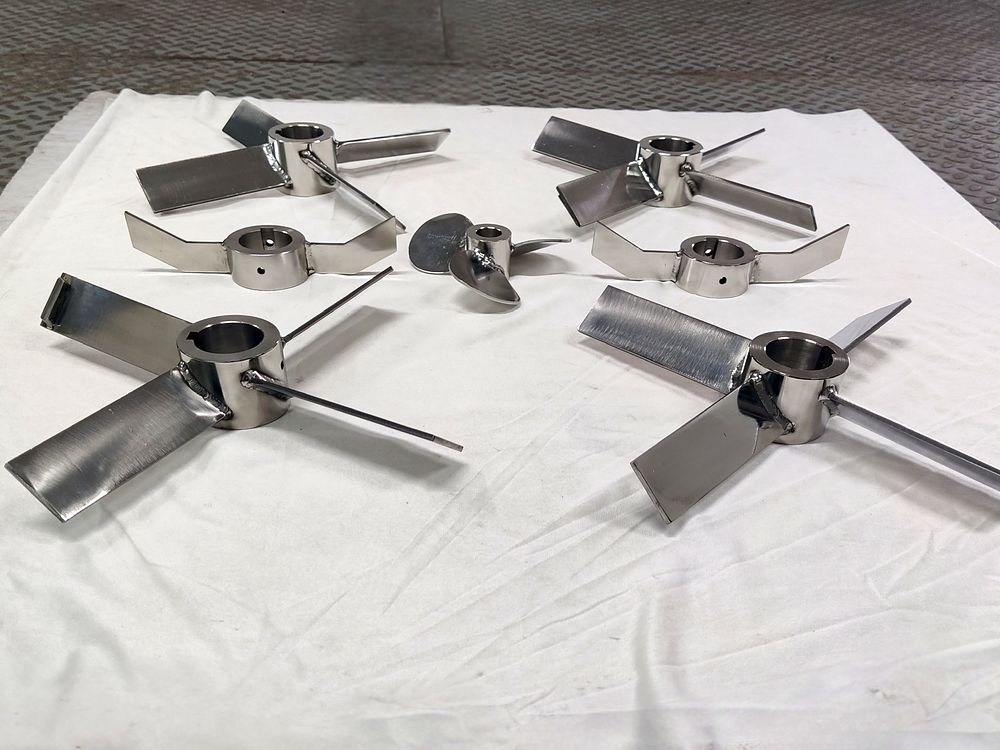
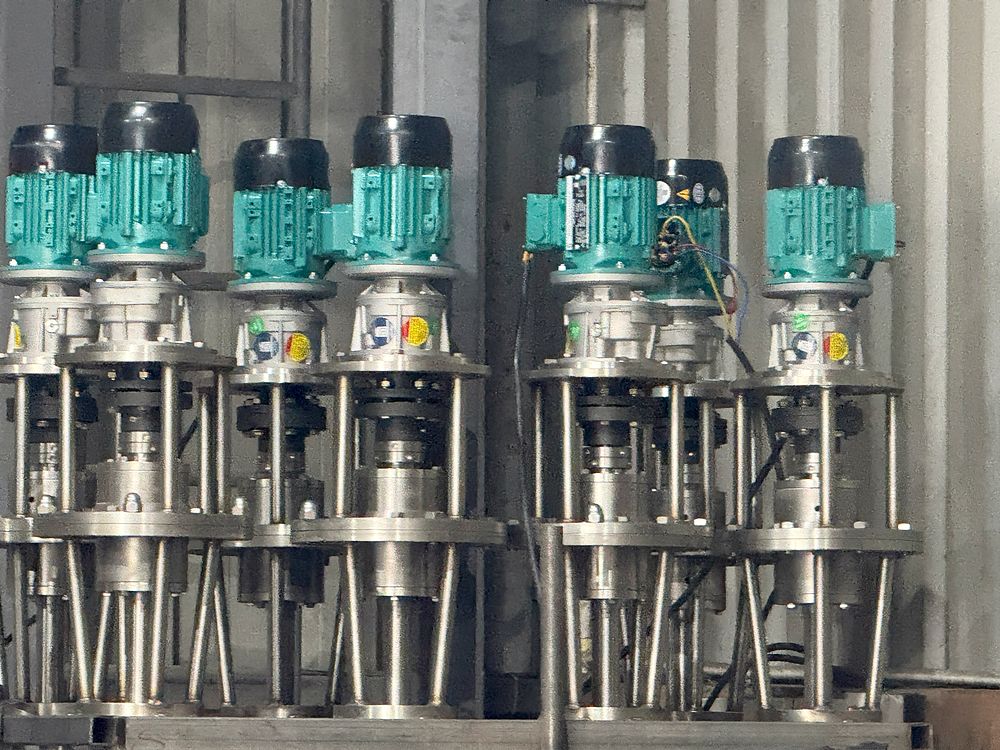
Every FMT top entry agitator is designed for one vessel and one duty. We start from the process: volume, liquid height, viscosity, density, solids and what the batch has to achieve. From that we choose the impeller type and diameter, the number of impellers on the shaft, the speed and the absorbed power.
The mechanical design follows the hydraulic design. The shaft is checked for combined bending and torsion, for deflection at the seal and for a safe margin from its critical speed. The bearing housing, mounting stool and, where it is needed, a bottom steady bearing are then sized for the loads the impellers actually put on the shaft. You get a datasheet and a general arrangement drawing with the offer, so you can check the fit on your vessel before you order.
Where it is used
- Reactors and agitated process vessels
- Blending and storage tanks
- Slurry and solids suspension tanks
- Dissolving and make-up tanks
- Neutralisation and dosing tanks
- Jacketed vessels for heating and cooling
How FMT builds it
| Drive | Geared motor, or motor with a separate gearbox; variable speed drive on request |
|---|---|
| Impellers | Hydrofoil, pitched blade, disc turbine, anchor or helical ribbon, one or more on the shaft |
| Shaft | Solid or hollow, one piece or coupled; checked for stress, deflection and critical speed |
| Support | Bearing housing on a mounting stool; bottom steady bearing for long shafts where needed |
| Shaft seal | Stuffing box, lip seal, or single or double mechanical seal |
| Wetted parts | SS 304, SS 316 / 316L or carbon steel; other materials on request |
| Mounting | Flanged on a vessel nozzle, or on a bridge for open tanks |
The red lines show how the impeller moves the liquid. Every FMT unit is sized for its own vessel, product and duty, so yours is drawn for your tank in the offer.
Send your vessel for a drawing


What we need to size it
- Vessel diameter, straight-side height and bottom shape (dished, conical, flat)
- Working volume and liquid level range, including the lowest level at which mixing must continue
- Product: density, viscosity at operating temperature, solids content and particle size
- What the agitator must do: blend, suspend, disperse, dissolve, heat or cool, react
- Operating and design pressure and temperature, and whether the vessel is open or closed
- Preferred materials, seal type, motor make, power supply and hazardous-area classification