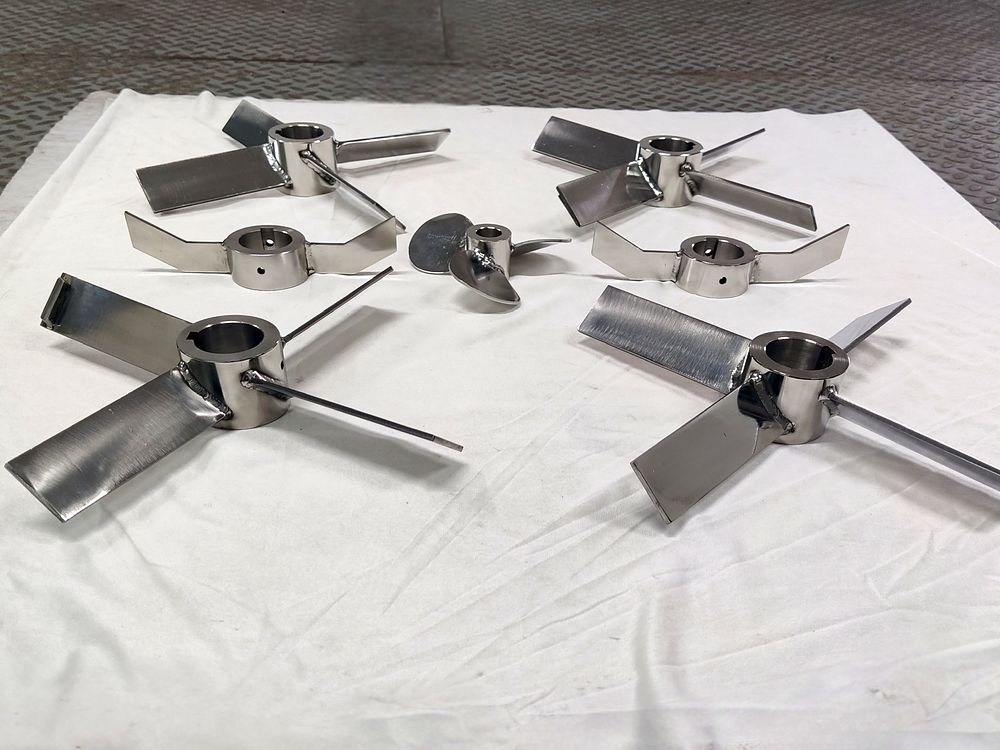

Dispersers are the workhorse of paint, ink, adhesive and coating plants. The disc creates a rolling, doughnut-shaped flow: product is drawn down the shaft, thrown out across the disc and returned up the vessel wall, so every part of the batch passes through the high shear zone again and again.
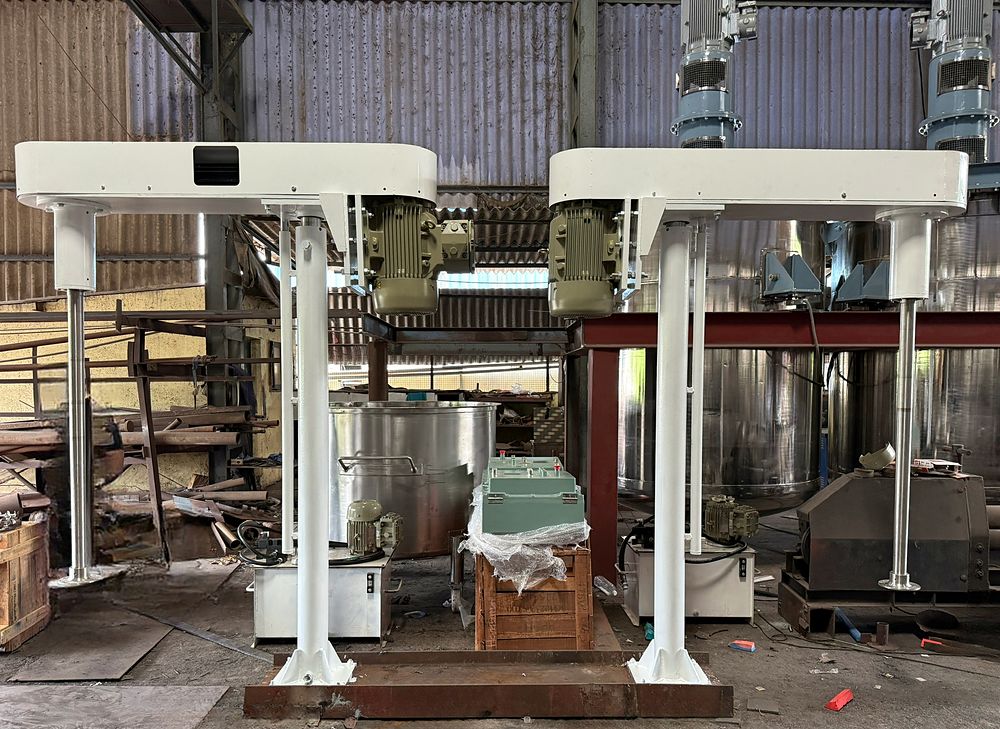
Disc diameter, disc position and speed have to match the vessel and the product, and the speed has to change as viscosity builds during the batch, so most FMT dispersers run on a variable speed drive. For portable vessels the disperser is mounted on a hydraulic lift so the shaft can be raised and the vessel changed. Fixed dispersers can be mounted on a vessel or bridge.
Where it is used
- Pigment and filler dispersion in paints and coatings
- Powder wetting and dissolving
- Inks, adhesives and sealant premixes
- Putty, primers and emulsions
How FMT builds it
| Drive | Motor with V-belt or direct drive, on a variable speed drive |
|---|---|
| Disc | Saw-tooth disperser disc, size matched to the vessel |
| Mounting | Hydraulic lift for changeable vessels, or fixed on a vessel or bridge |
| Wetted parts | SS 304 or SS 316 |
| Options | Second slow-speed agitator for viscous batches (see multi-shaft mixers) |
The red lines show how the impeller moves the liquid. Every FMT unit is sized for its own vessel, product and duty, so yours is drawn for your tank in the offer.
Send your vessel for a drawing

What we need to size it
- Vessel diameter, straight-side height and bottom shape (dished, conical, flat)
- Working volume and liquid level range, including the lowest level at which mixing must continue
- Product: density, viscosity at operating temperature, solids content and particle size
- What the agitator must do: blend, suspend, disperse, dissolve, heat or cool, react
- Operating and design pressure and temperature, and whether the vessel is open or closed
- Preferred materials, seal type, motor make, power supply and hazardous-area classification